With External Regulator
NOTE: This test is only for vehicles equipped with an external electronic voltage regulator (EVR).
If the voltmeter does not indicate more than 0.5 volts above the base voltage, follow these procedures:
Volt-ohmmeter:
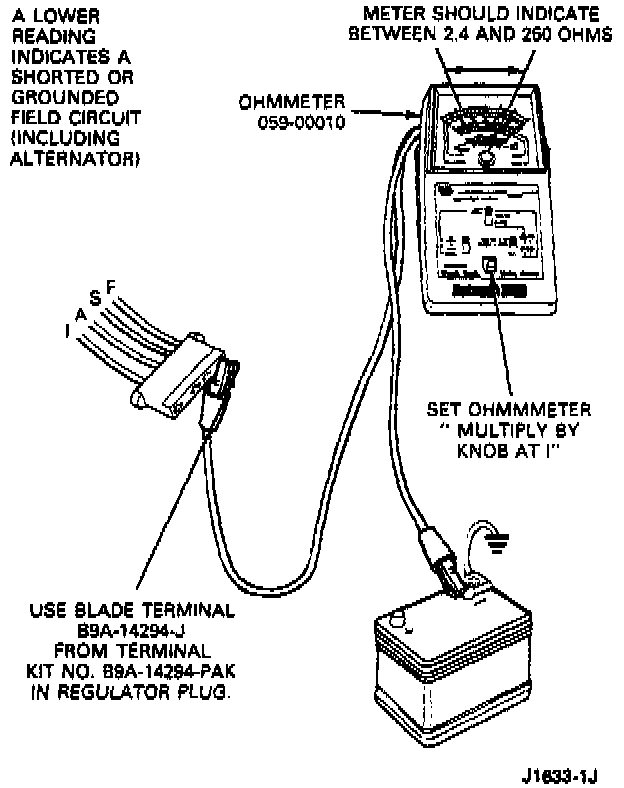
1. Disconnect wiring plug from regulator and connect an ohmmeter from the F terminal of the plug to a ground. The meter should read more than 2.4 ohms. If less than 2.4 ohms is indicated, service the grounded field circuit in the wiring harness or the alternator and then repeat the load test. Load Test
Jumper Wire:
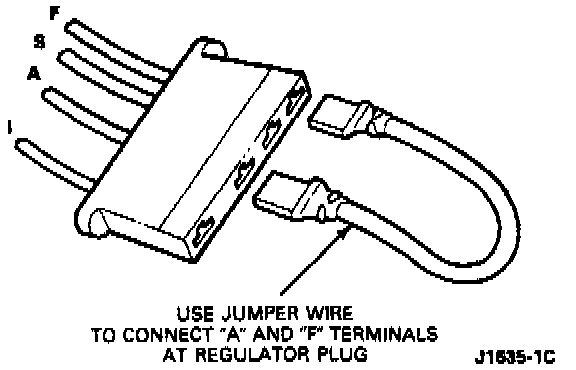
2. If the ohmmeter indicates more than 2.4 ohms, connect a jumper wire from the A to F terminals of the plug and repeat the load test. Load Test
If the voltmeter now indicates more than 0.5 volts above base voltage, the regulator or wiring is damaged or worn. Perform S and I circuit tests and service wiring or regulator as required. Regulator I and/or S Circuit Test
Jumper Wires:
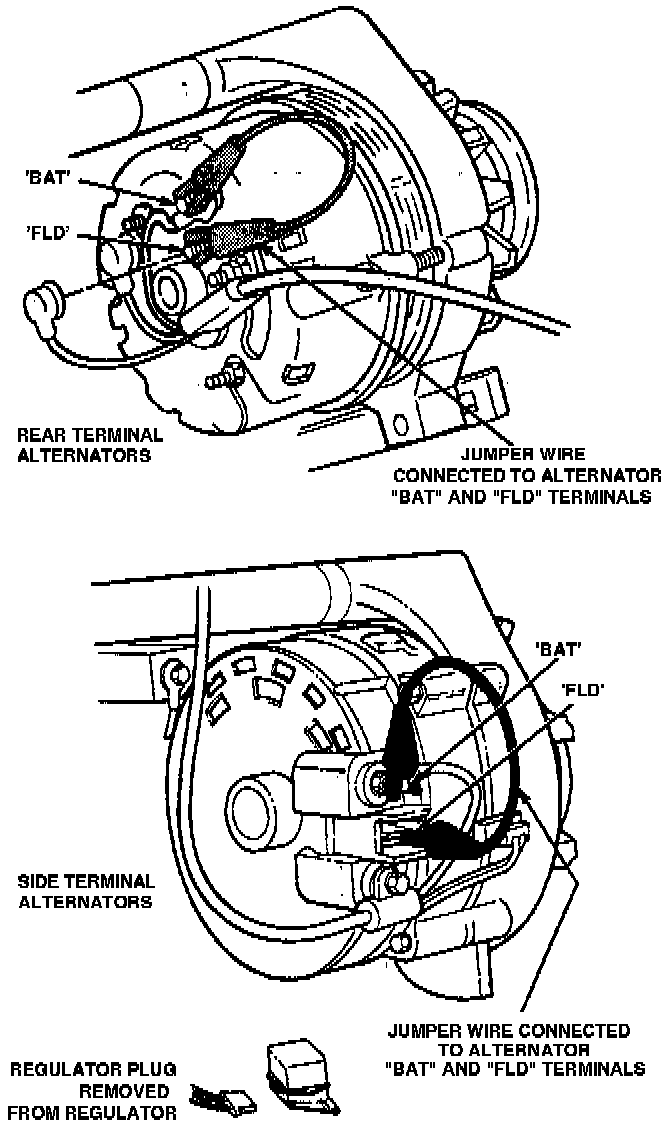
3. If the voltmeter still indicates a problem of under voltage, remove the jumper wire from the regulator plug and leave the plug disconnected from the regulator. Disconnect the FLD terminal on the alternator and pull back the protective cover from the BAT terminal. Then connect a jumper wire to the FLD and BAT terminals on the alternator and repeat the load test. Load Test
4. If the voltmeter now indicates a 0.5 volt or more increase above the base voltage, perform S and I circuit tests and service the wiring or regulator as indicated. Regulator I and/or S Circuit Test
5. If the voltmeter still indicates under voltage, stop the engine and move the positive voltmeter lead to the BAT terminal of the alternator. If the voltmeter now indicates base voltage, service the alternator. If the voltmeter indicates zero volts, service the alternator to starter relay wire.