Air Pressure Checks AOD
Air Pressure Checks AOD
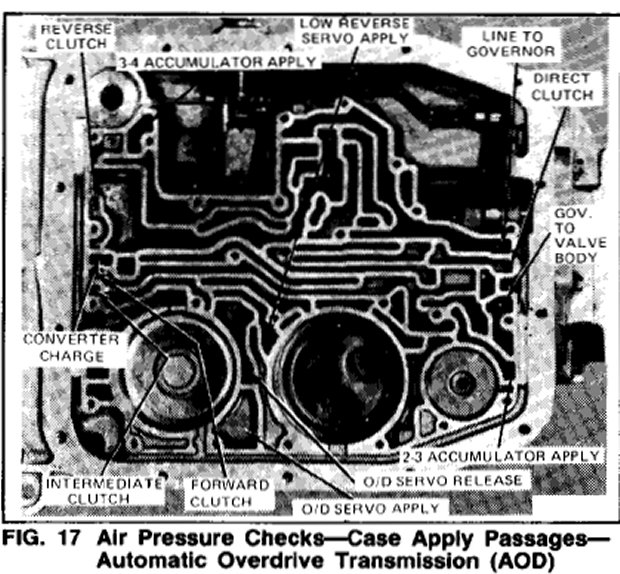
A NO DRIVE condition can exist even with the correct transmission fluid pressure because of inoperative clutches or bands. The inoperative units can be located by substituting air pressure for fluid pressure through a series of passages to determine the location of the malfunction (Fig. 17).
A NO DRIVE condition in OD (overdrive) may be caused by an inoperative forward clutch or one-way clutch. When there is a NO DRIVE in 1st. (first), the difficulty could be caused by improper functioning of the forward clutch or low-reverse band and the one-way clutch.
Air pressure checks can also isolate slip problems as to whether the source of the problem is in the valve body or in the hydraulic system beyond the valve body.
The passages can be tested adequately with air pressure regulated at 40 psi. However, it may be necessary to use higher air pressure (90 psi) if there is difficulty in hearing the clutches apply.
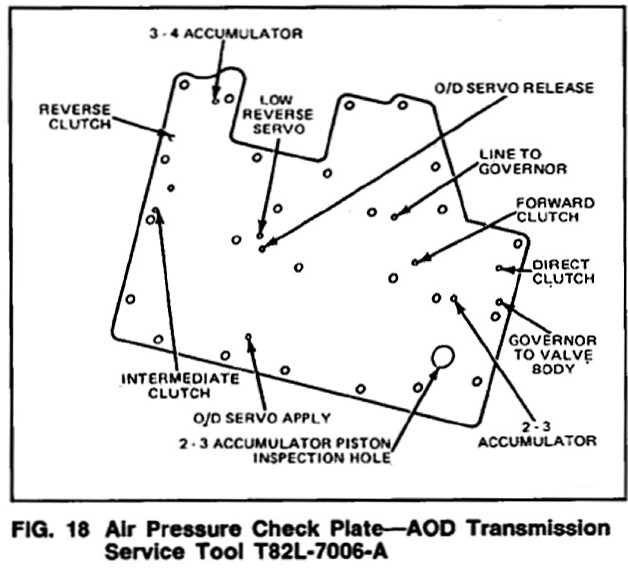
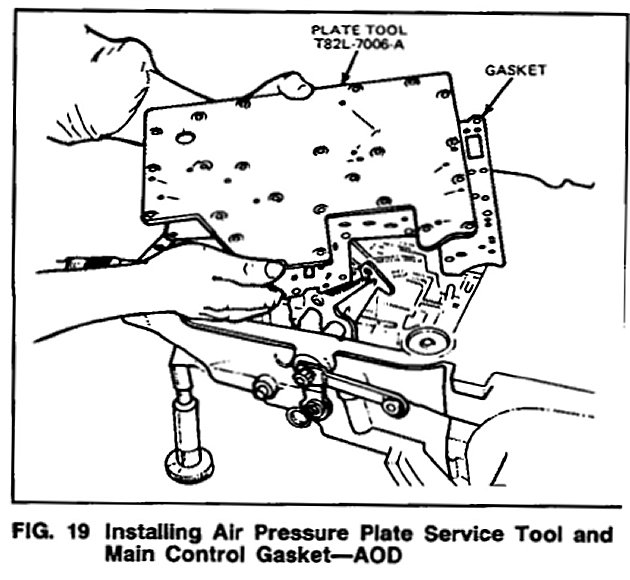
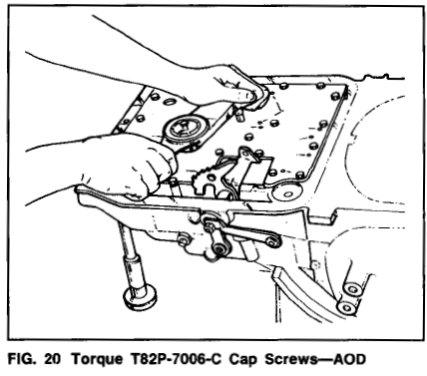
Use the main control gasket and service Tool T82L- 7006-A with T82P-7006-C cap screws (M6 x 16) to seal the case apply passages (Figs. 18 and 19). Tighten the cap screws 9-11 N.m (80-100 in. lb.) (Fig. 20). Apply air to the apply passages in the service tool plate using the air nozzle service tool Tool-7000-DE with the rubber tip Tool-7000-DD or equivalent.
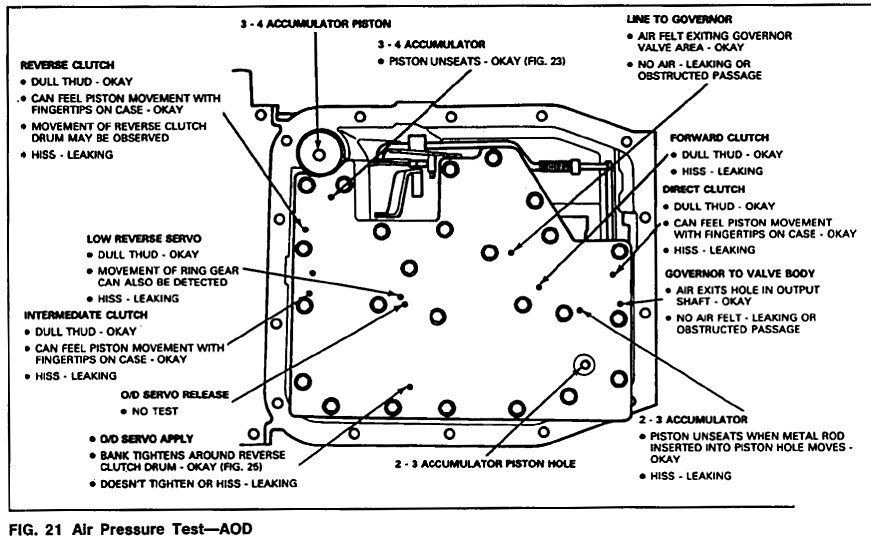
All locations of the case apply passages are stamped on the service tool plate. The transmission case apply holes are illustrated in Fig 21.
Notes on Air Checks:
If the servos or the accumulators do not operate disassemble, clean and inspect them to locate the source of the trouble. If air pressure applied to either of the clutch passages fails to operate a clutch or operates both clutches at once, remove and with air pressure, check the fluid passages in the case and front pump to detect obstructions.